Monastery of the Hieronymites : info and guided tour
Introduction to the Monastery of the Hieronymites
The Monastery of the Hieronymites, or Mosteiro dos Jerónimos, is located in Belém, in Lisbon, near the Tagus River. This former monastery is one of Portugal’s most famous monuments and is a UNESCO World Heritage Site. It was founded in the early 16th century, in a context linked to Portuguese maritime expansion.
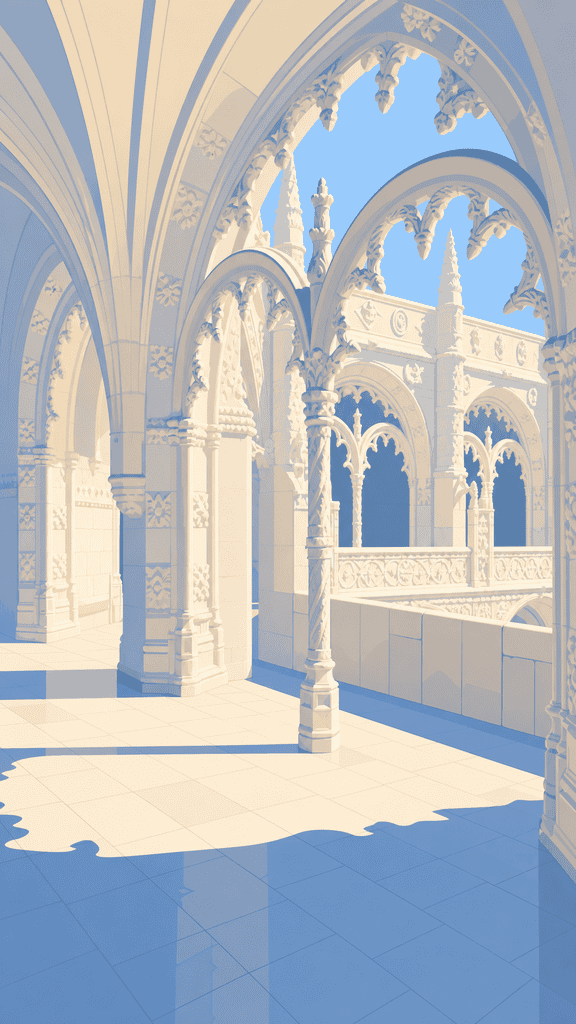
The building is a masterpiece of the Manueline style, recognizable by its finely carved stone, its plant, marine, and religious motifs, as well as its large arches. The complex notably includes a remarkable cloister, considered one of the most beautiful in the country, with elegant galleries and richly ornamented decoration.
The monastery is also a major site in Portuguese national memory. It houses the tombs of major figures in the country’s history, including Vasco de Gama and Luís de Camões. Its monumental façade and the adjoining church especially draw attention, with their ornate portals and balance between austerity and decorative richness.
Visiting the Monastery of the Hieronymites means discovering a monument that connects religious history, maritime power, and architectural art. Its importance lies as much in its aesthetic quality as in its symbolic role in Portuguese identity. The complex forms an exceptional testament to the Age of Discovery.
Discover Lisbon with a private guide
A private guide can help you better understand the significance of the Monastery of the Hieronymites by highlighting its history, its Manueline architecture, and the symbols visible in its carvings. In the context of Lisbon, this guidance also makes it possible to connect the monument to Portugal’s maritime rise and its cultural heritage.