Chùa Cầu : info and guided tour
Introduction to Chùa Cầu
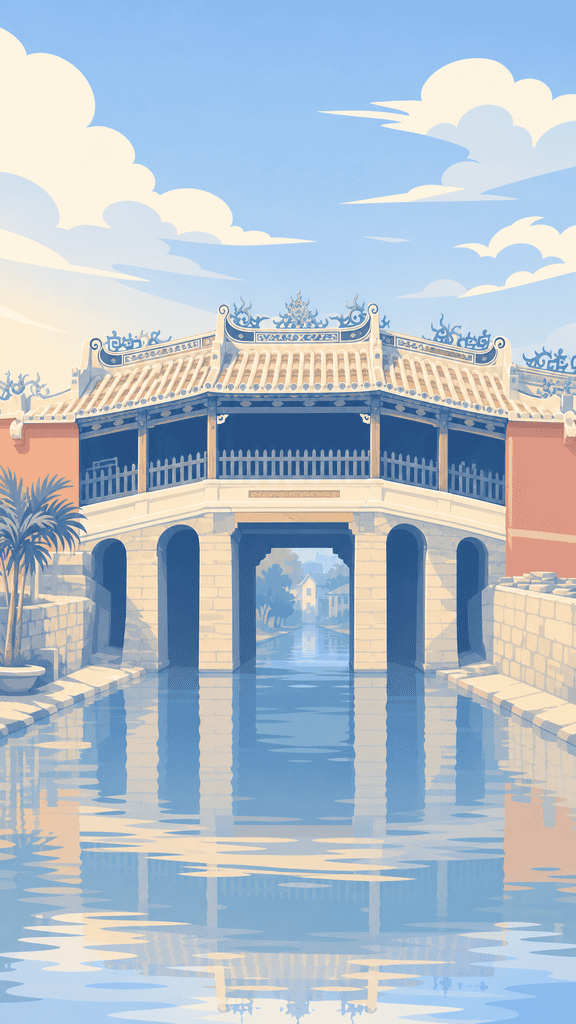
Chùa Cầu, often called the “Japanese Bridge,” is one of the best-known landmarks in Hoi An. Located on Nguyễn Thị Minh Khai, in the UNESCO-listed Old Town, it connects two banks of a small waterway. This historic site stands out for its covered silhouette, part bridge, part walkway, part place of memory.
The monument is generally linked to the Japanese merchants who settled in Hoi An in the past, and later to the town’s trading history. Its wooden structure rests on masonry piers and forms a sheltered passage, a rare feature in local architecture. The whole ensemble reflects the cultural blend that defines the old port city.
Chùa Cầu is also notable for its simple decorative details, curved roof and interior spaces used for devotion. Its compact, almost intimate appearance contrasts with the site’s symbolic importance. For many visitors, it is the most iconic image of Hoi An, photographed at sunrise or at dusk.
A visit lets you observe the bridge itself, its carved panels, decorated ends and how it fits into the historic fabric of the nearby lanes. More than just a crossing, Chùa Cầu bears witness to Hoi An’s commercial, religious and community life, which explains its central place in discovering the town.
Discover Hoi An with a private guide
A private guide can help you understand the details of Chùa Cầu and place this monument in the history of Hoi An. They provide context on its architecture, its uses and its role in the old merchant town, while making the visit clearer and more attentive to features that are easy to overlook on your own.