Colossi of Memnon : info and guided tour
Introduction to the Colossi of Memnon
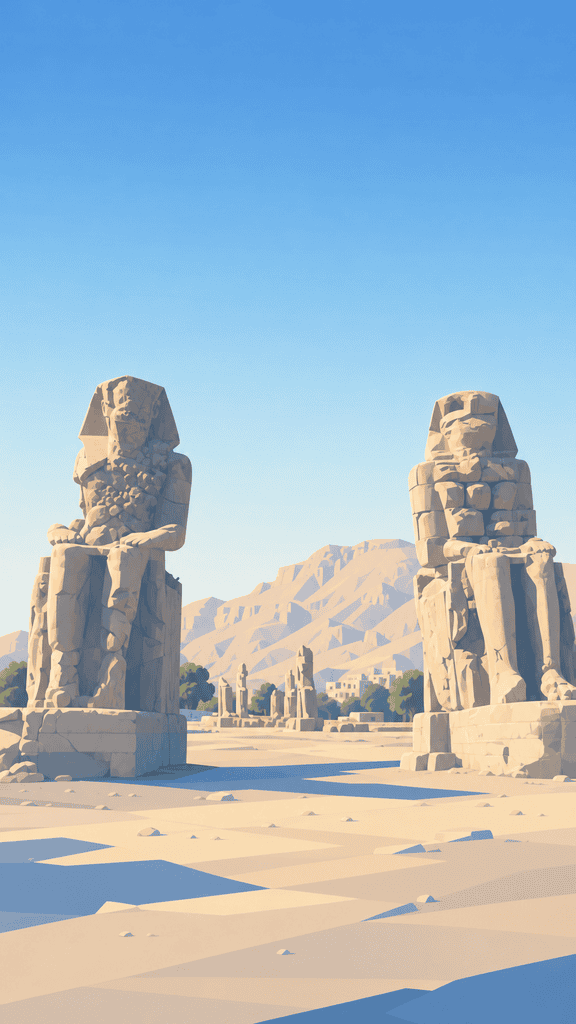
The Colossi of Memnon are two monumental stone statues standing on the west bank of Luxor, near the site of ancient Thebes. They depict the pharaoh Amenhotep III seated on his throne. Positioned at the entrance of a largely vanished funerary complex, they are among the most impressive remains of ancient Egypt.
Carved from quartzite, these giant figures reach several metres in height and retain a solemn posture, facing the Nile and the lands of western Thebes. Despite erosion and damage over the centuries, the hieratic features of the ruler and the strict proportions of Egyptian monumental art are still discernible.
Their fame also comes from the name “Memnon,” later associated with the Greek hero Memnon, as well as from the strange reputation they acquired in antiquity. One of the statues once emitted a sound at dawn, a phenomenon that gave rise to stories and legends. Today, the site attracts visitors for its scale, its history, and its symbolic power.
What to see on site, the ensemble formed by the two statues is the central feature, along with their bases, their sculpted details, and the vast archaeological landscape surrounding them. Their isolated position in the heart of the Theban plain reinforces the effect of monumentality and recalls the scale of the original funerary complex.
Discover Luxor with a private guide
A private guide can help place these statues in their historical context, explaining their link with Amenhotep III, the nearby funerary complex, and the ancient traditions associated with them. The visit thus becomes clearer, with precise reference points for the architecture, iconography, and landscape of Luxor.