Taj Mahal : info and guided tour
Introduction to the Taj Mahal
The Taj Mahal is the most famous monument in Agra, India, and one of the best-known sites in the world. Located in Dharmapuri, in the Tajganj district, it stands on the banks of the Yamuna River. This white marble mausoleum was built as an imperial tomb, in the tradition of the great Mughal funerary complexes.
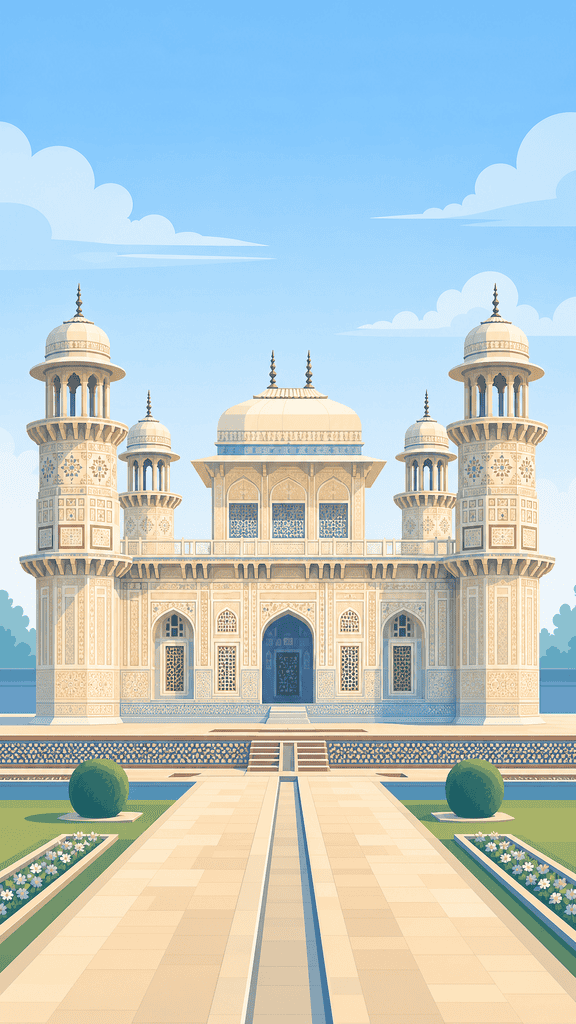
Commissioned by the Mughal emperor Shah Jahan, the Taj Mahal is generally presented as a tribute to his wife Mumtaz Mahal. Its architecture combines strict symmetry, a central dome, slender minarets, and a vast axial garden. The marble surfaces are enhanced with inlays of semi-precious stones and refined calligraphic decoration.
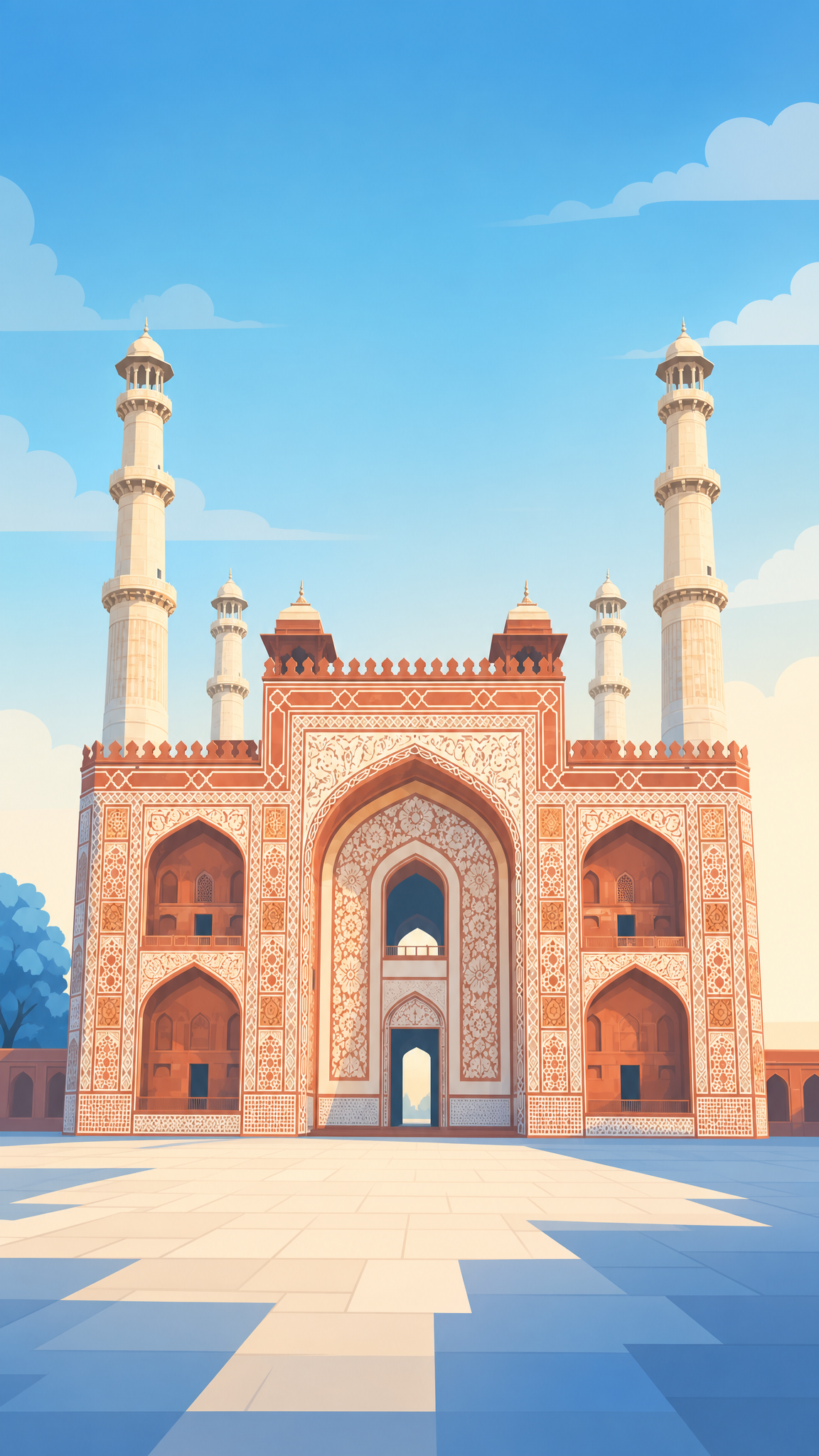
The monument is famous for the harmony of its proportions and for the changing brightness of its marble, which varies according to the time of day. Among its emblematic features are the grand entrance gate, the central pool, the main mausoleum, and the four minarets that frame the ensemble. The whole forms a monumental composition of great precision.
Classified among the masterpieces of Indo-Islamic art, the Taj Mahal appeals both for its historical value and for its symbolic significance. It represents one of the pinnacles of Mughal architecture in India and remains a major landmark of Agra’s heritage. Its white silhouette, immediately recognizable, makes it an essential site to visit.
Discover Agra with a private guide
A private guide makes it easier to understand the Taj Mahal by providing clear background on its history, its architecture, and its place in the former Mughal capital of Agra. Their guidance helps you read the monument’s details, identify its key features, and place the visit in its cultural context.