Temple of Heaven : info and guided tour
Introduction to the Temple of Heaven
The Temple of Heaven in Beijing is one of the most famous religious and heritage sites in China. Located in the Dongcheng District, it once formed a vast imperial sanctuary where emperors came to pray for good harvests and perform rites essential to the agricultural calendar.
Built during the Ming dynasty and later expanded in the Qing era, the site illustrates the relationship between imperial power and the heavens in Chinese tradition. Its symbolic layout is based on circular and square forms, associated respectively with heaven and earth, an idea visible in the overall organization of the complex.
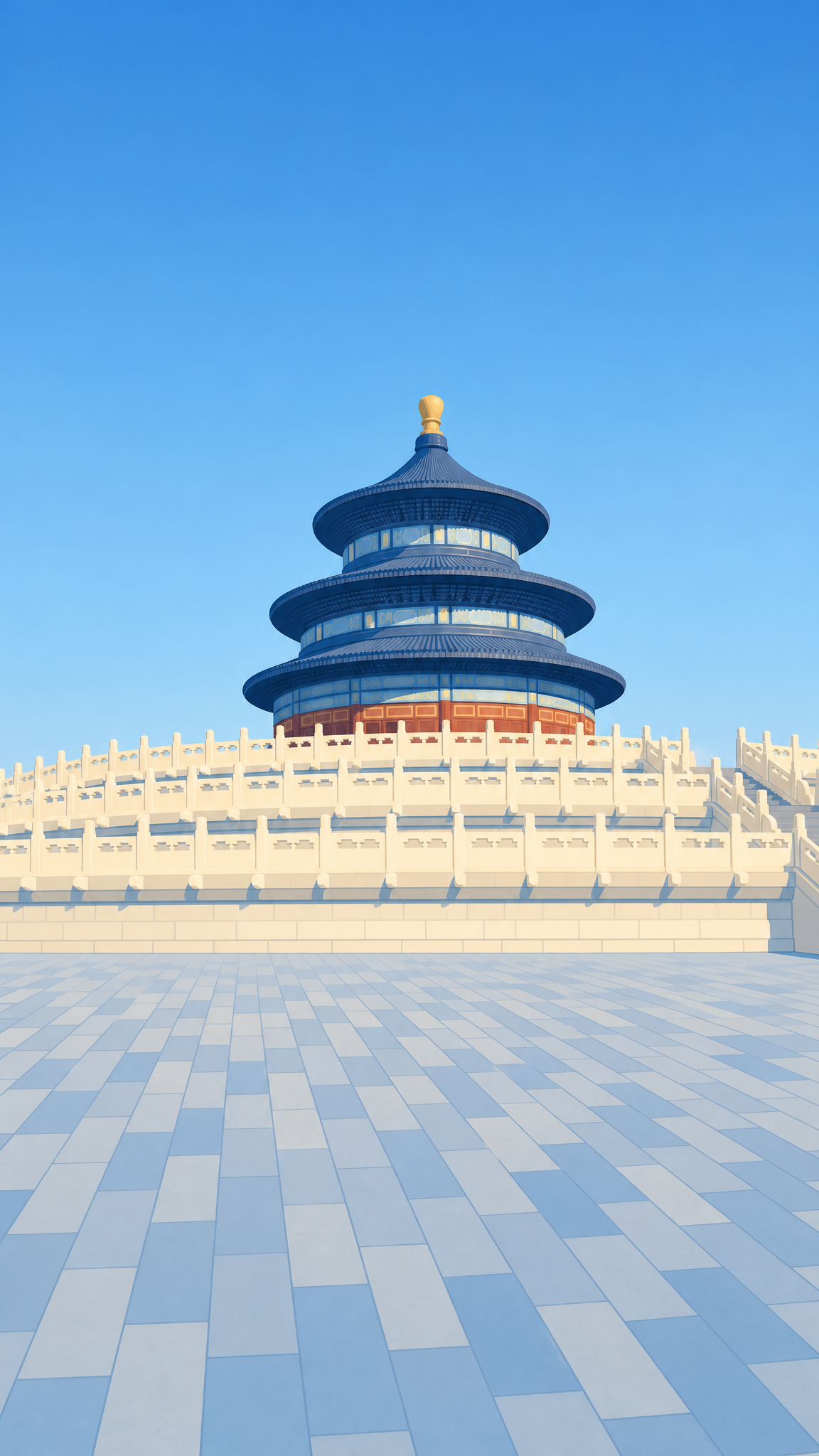
The best-known monument is the Hall of Prayer for Good Harvests, with its iconic blue roof and remarkable wooden structure, assembled without visible nails. The site also includes the Circular Mound Altar and the Echo Wall, elements that contribute to its architectural renown and its acoustic and ritual interest.
Listed as a UNESCO World Heritage Site, the Temple of Heaven attracts visitors as much for its historical value as for the harmony of its gardens and buildings. It is a place where art, cosmology, and imperial ceremony can still be read in every detail of the route.
Discover Beijing with a private guide
A private guide can help explain the symbolism of the Temple of Heaven, its ritual uses, and the logic behind its architecture. It also helps place the monument in the history of Beijing and identify its most significant details, which are often difficult to grasp without explanation.